The module to start early · 34 steps · built in seconds
Start this early

Start atthree seconds.

Built so small that he never finds out he was worried.

Yes — start this before it is a problem

Checkout opens shortly. Nothing is charged today.

Where this one lands

Alone In The Kitchen covers these weeks.

See all sixteen weeks →

What you get out of it

Alone In The Kitchen gives you this.

Door closed, door opened, nothing said. Twenty times a day.

Why leaving him longer fails

Above the threshold, nothing is learned. It is only rehearsed.

Yes — start this before it is a problem

How a step is written

Thirty-four steps, each on a page

Week 2

Three Seconds

  • Door closed, three seconds, door opened, nothing said
  • Twenty repetitions a day, deliberately boring
  • No greeting, no fuss, no food on return
  • If he reacts at three seconds, the answer is one
Time 10 minOne week

Any week

Measure, Do Not Guess

  • A phone on a shelf, recording, while you leave for two minutes
  • Watch the first ninety seconds
  • Note the second panting, pacing or whining starts
  • That number is your starting point, and it is usually a surprise
Time 2 minDone once

Week 5

The Departure Cues

  • Keys, coat and shoes, done at random with no leaving
  • Until they predict nothing at all
  • The cues trigger it more often than the absence does
  • This chapter alone resolves some puppies
Time 5 minTwo weeks

Thirty-one more steps across measuring, the door, the cues, growing the duration, and the weeks it goes backwards.

The method, in pictures

What it looks like in a kitchen.

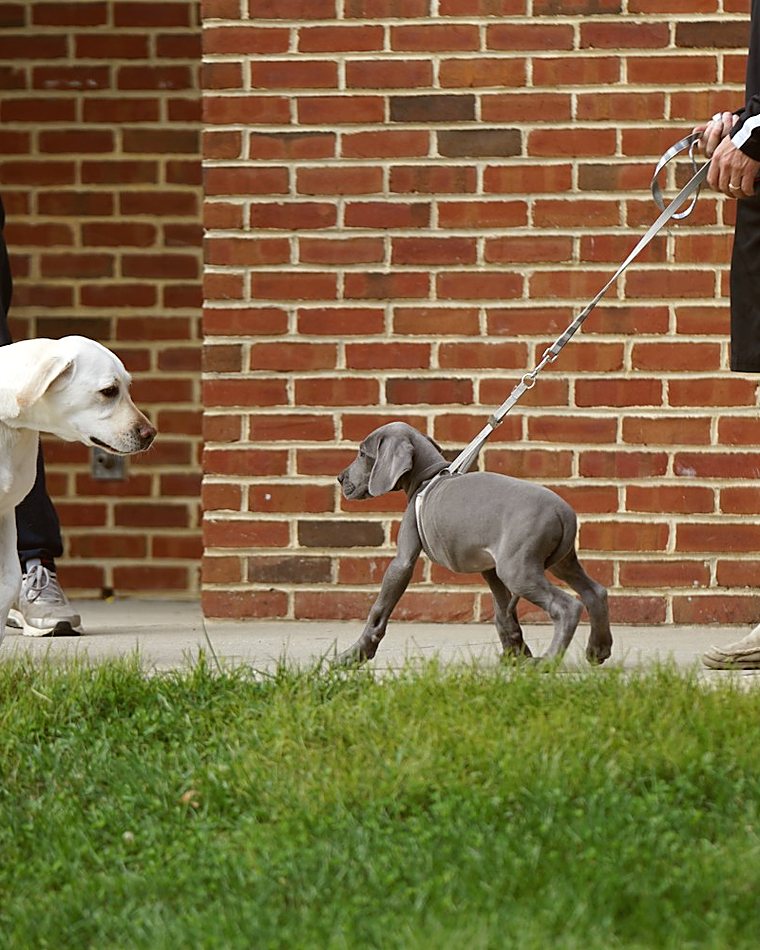
Three seconds
Three secondsDoor closed, door opened, nothing said. Twenty times a day.
Start in week two
Start in week twoWhile there is nothing wrong, which is the easy moment.
Measured, not guessed
Measured, not guessedA phone on a shelf for two minutes. The number surprises people.
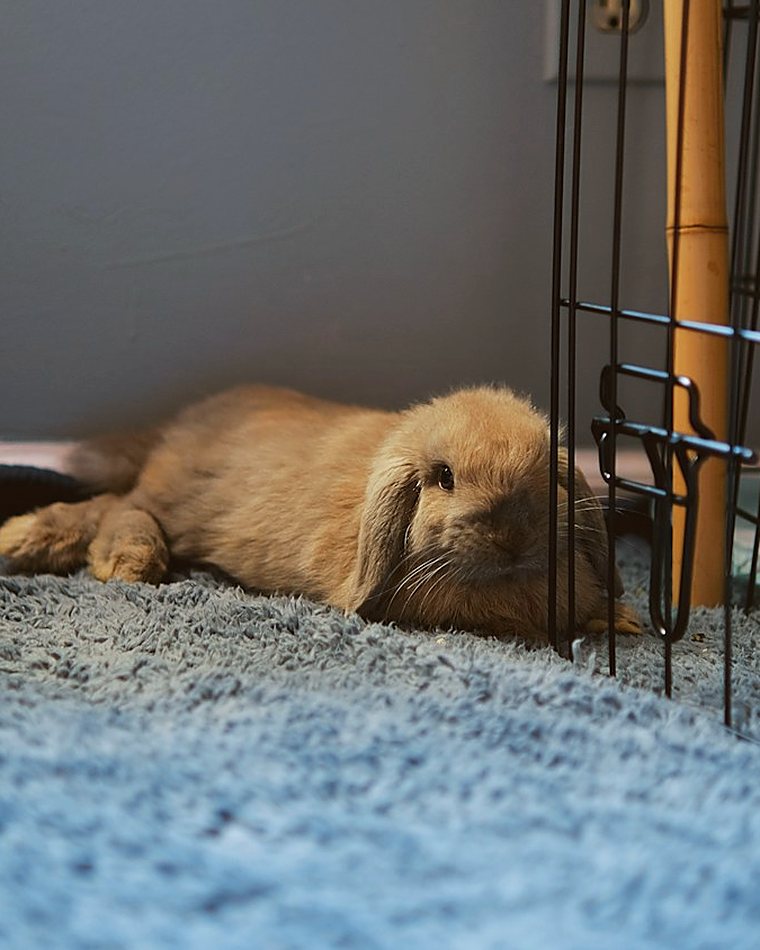
A puppy lying alone on a rug

What you walk away with

Forty seconds a day from week two, so month five never becomes a problem.

Yes — start this before it is a problem

Sample pages

A look inside

Week two: the door closed for three seconds, and the camera that tells you whether that was already too long.
An actual page from the PDF, at full size
  • Why week two is the right time and week twenty is the hard one
  • Filming a two-minute absence and reading the first ninety seconds
  • Three seconds, twenty times a day, deliberately boring
  • The departure cues — keys, coat, shoes — defused separately
  • Growing duration in increments small enough to be invisible
  • What to do about work, and what not to arrange
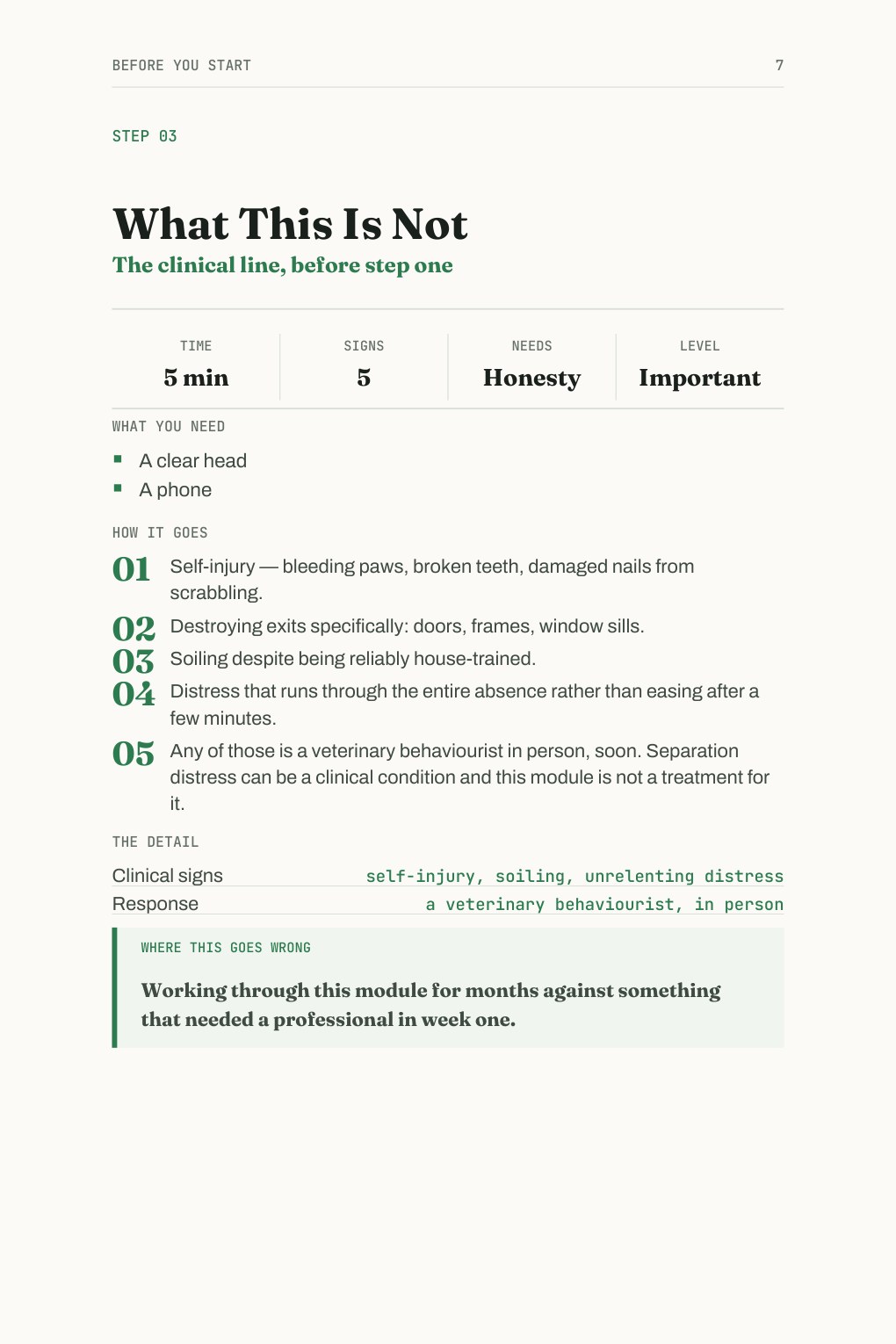
  • The line where this stops being a training question

What you get

A module that starts at three seconds

Thirty-four steps across five chapters — measuring, the door, the cues, growing duration and the setbacks.

  • 34 stepsEach on its own page
  • Starts at3 seconds
  • 5 chaptersMeasure to maintain
  • Instant accessThe moment you buy
  • A filming protocol, because guessing fails
  • Increments small enough that he never notices
  • The departure cues defused separately
  • A clear page on when this belongs with a vet
While there is nothing wrong, which is the easy moment.

Why this one

Built from where he actually is

Not from where the advice assumes he is.

Yes — start this before it is a problem

The ebook

Alone In The Kitchen

Built in seconds rather than hours, and started before there is a problem. Thirty-four steps, five chapters.

$37

Yes — start this before it is a problem

Checkout opens shortly. Nothing is charged today.

Instant digital download. One-time payment of $37, billed securely by Digistore24. Educational material about raising a puppy. This is not veterinary advice. Separation distress can be clinical and belongs with a veterinary behaviourist in person.

Questions

My puppy is fine alone. Do I need this?

That is the best possible time to do it. Most separation problems are built by never practising while things are easy.

He destroys the door when I leave.

Stop and see a veterinary behaviourist. Destruction of exits and self-injury are clinical signs, not training gaps.

How long does it take?

For a puppy started early, weeks. For an adult dog with an established problem, months — and the module says so rather than promising faster.

Do I need a camera?

A phone on a shelf is enough, and the measurement step cannot be skipped.

I work full time. Is that compatible?

There is a chapter on managing while you train, including what to arrange and what not to.

Do I need the method as well?

No. This module stands alone.

What if it is not for me?

Write within 60 days and you get your money back. You keep the file.

Three seconds, then four

Started in week two, while there is nothing wrong.

Yes — start this before it is a problem

Checkout opens shortly. Nothing is charged today.

This is educational material about raising and training a puppy. It is not veterinary advice, not a behavioural diagnosis, and not a treatment for any condition. Vaccination timing, when it is safe to walk in public, and anything concerning your puppy's body are questions for your vet. Real aggression, intense fear and any sudden change in behaviour belong with a veterinarian or a qualified veterinary behaviourist in person. Puppies are individuals and no method guarantees a result.